

(This article originally appeared in the October 2026 issue of the South Baltimore Peninsula Post.)
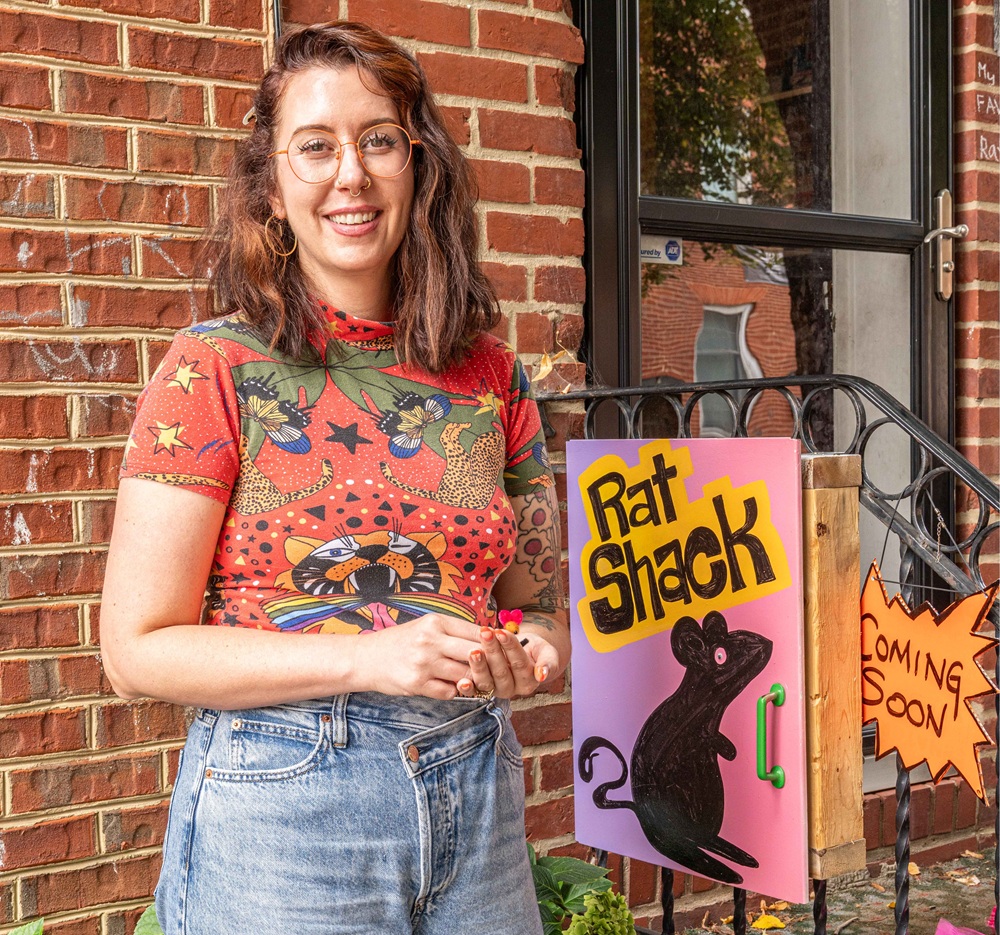
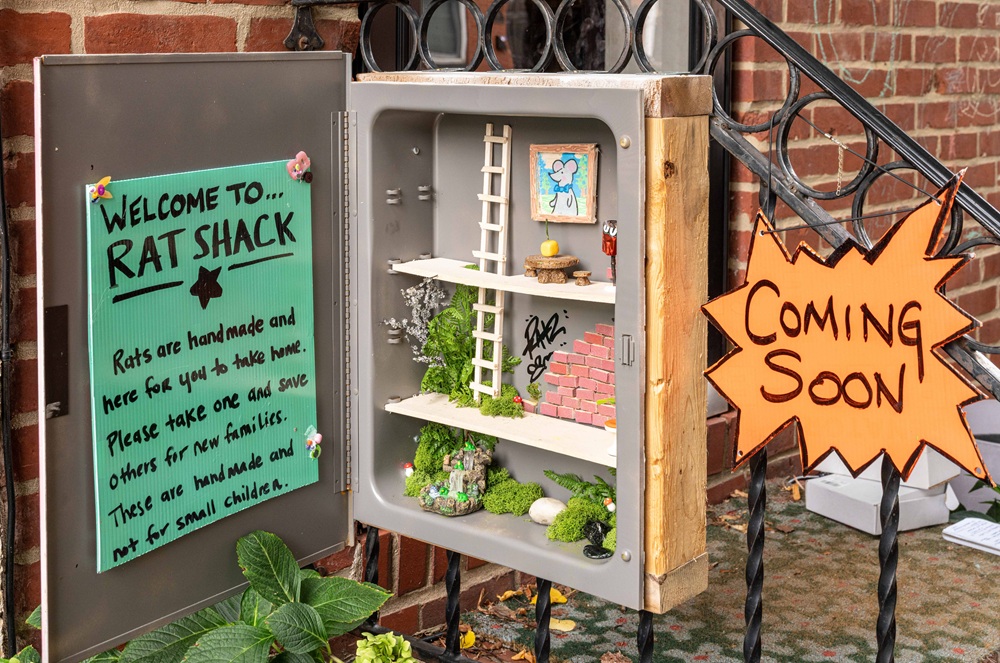
It was supposed to be a quick, couple-of-weeks art giveaway for the SoBo community. Meg Murray had 47 tiny felt rats she had made since this spring. She converted a used medicine cabinet from Second Chance into a “Rat Shack” display case, bolted it to the railing of her William Street home in late July, and encouraged passersby to take one of the diminutive rodents. Once all the rats had found new homes, the shack would come down and Murray would declare her goodwill-sharing mission complete.
But then fate and Instagram stepped in. Now, over 200 felt rats, hundreds of thousands of social media Likes, and a countless stream of daily visitors later, there is no end in sight for the Rat Shack at the corner of William and E. Ostend.
“I never thought this would become the way that it’s become,” Murray told the Peninsula Post in mid-September. “My thought was that this would be a hyperlocal, analog thing that would be just in front of the house. Somebody would stumble upon it. It would be for the local community, and it would be mostly kids.”
Less than a day after the Rat Shack debuted on Murray’s stoop, Baltimore realtor Emily Turner happened to walk by while checking on a listing nearby. “I saw a sign that said ‘Rat Shack,’ and of course I was intrigued,” she wrote via Instagram message. “I thought to take a little video clip because it was very clear that someone spent a lot of time making these little rats for the neighborhood to enjoy and asking for nothing in return. It’s little things like this that make Baltimore so special, and I wanted to highlight it.”
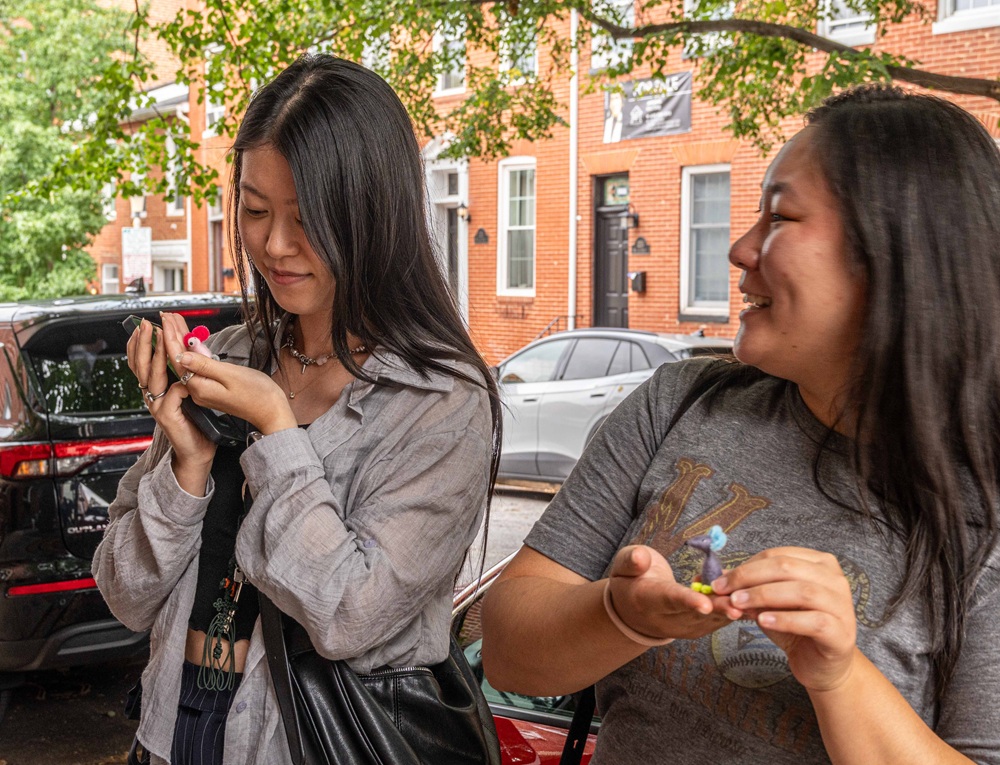
Turner shared the video with her 28,000 Instagram followers (@emilyinbaltimore) on July 26, and things quickly took off. (That post had nearly 290,000 likes as of late September.) A local social media influencer (@bella.de.roos) went “rat hunting” the next day, did not find one in the shack, was soaked in a downpour for her trouble, and posted about her adventure on Instagram. “That video went super mega viral, too, and then the media requests started coming rapid fire,” Murray recalled. The Baltimore Sun, WJZ-TV, FOX45, and Baltimore Fishbowl all interviewed her this summer.
The Rat Shack’s spreading fame also attracted a flood of other rat-themed artists and crafters from around the world to the project’s Instagram account (@rat_shack_baltimore), many asking if they could collaborate with Murray. “I got IG messages from other artists saying, oh my gosh, I love what you’re doing, you have this great audience, can I send you free stuff to put into the Rat Shack?”
Now on any given day, a visitor to the Rat Shack might be greeted with rat stickers or rat t-shirts from different artists. One local crafter (@claybyhillary) contributed little clay rats. Typically, less than a dozen rat items are put out in the shack each day, and release times are not announced in advance. Once when they were, Murray said she had a line of 27 people waiting outside her house.
Managing the unexpected Rat Shack juggernaut that she created can be challenging, Murray said, although the contributions from other artists have eased the work required to maintain a daily drop of new rat items. “I didn’t expect the level of virality and the amount of interest people would have.”
Murray reports that it takes about six minutes to make one “needle-felted” rat, down from about 15 minutes when she first took up the craft this spring. With a full-time job as a senior content strategist for a Baltimore tech company, Murray relies on rat-making assistance from a neighbor and her daughter and husband. “And my mom, who lives in upstate New York, sends me the pipe cleaner rat bodies.”
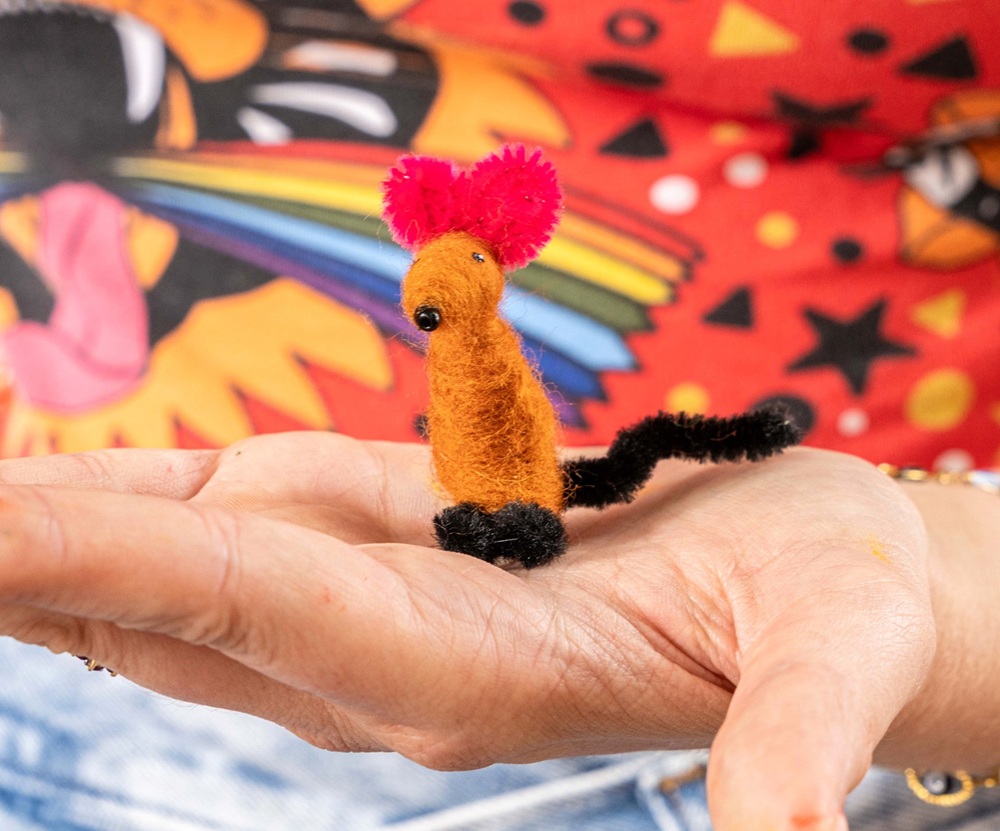
The rats, which average about 2 inches tall, begin with colored pipe cleaners that form the creatures’ backbone, snout, ears, feet, and tail. Lengths of wool are then wound around the pipe-cleaner backbone and snout to form the rat’s body and face. The wool is gently stabbed repeatedly with a three-pronged needle until it forms a solid surface. (“It’s very cathartic,” Murray reports.) The final touch is adding a bead for a nose and paint for eyes.
With the William Street Rat Shack now in its third month of existence, Murray says she is still having fun with it and has no plans to shut it down. “I’m deeply grateful for the response it’s gotten. Really at no point in this process have I given its future a lot of thought. It’s going to continue until people don’t want it anymore or I physically can’t do it anymore. It’s a vibe.” – Steve Cole

