

(This article originally appeared in the October 2025 issue of the South Baltimore Peninsula Post.)
By Saskia Lindsay
In SoBo’s Baltimore Peninsula neighborhood, a fast-growing company is blending science, art, and innovation to change lives and create local jobs. Longeviti Neuro Solutions, with a mission that merges creativity, compassion, and opportunity, is quickly becoming a standout addition to the neighborhood.
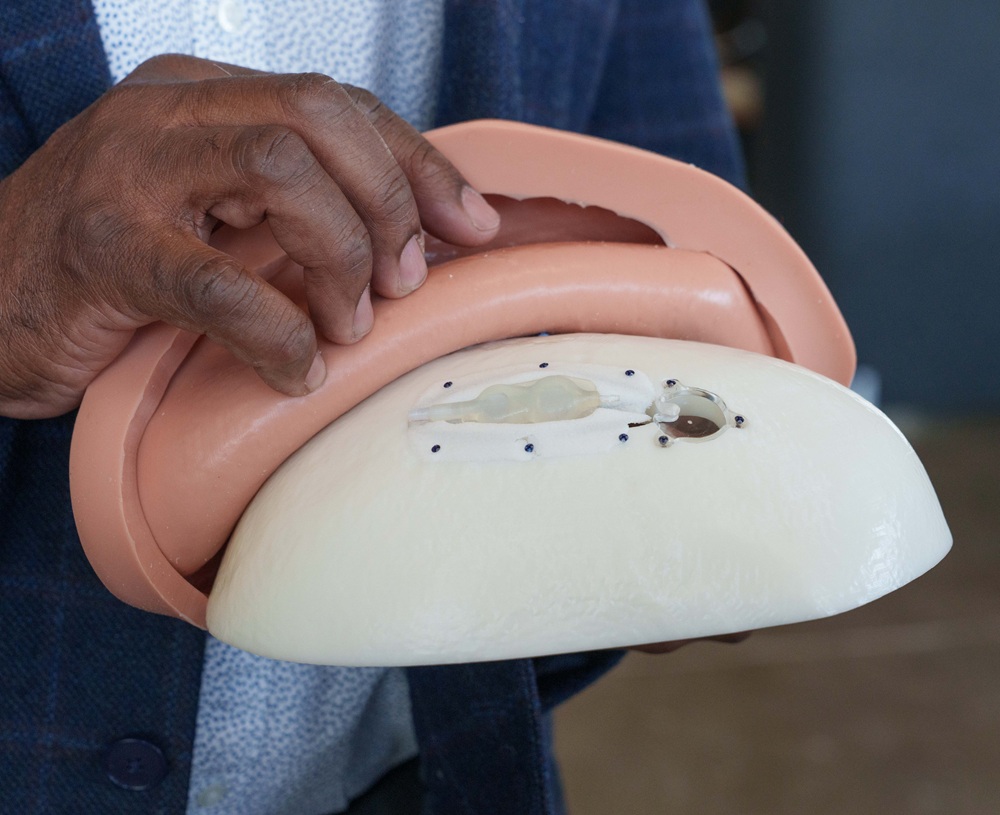
Longeviti specializes in developing advanced neurosurgical implants that restore both form and function for patients recovering from brain surgery or trauma. Their work combines science, technology, and design to create custom cranial implants that not only protect the brain but also improve patients’ quality of life. With a growing reputation as both a cutting-edge medical innovator and a community-minded employer, Longeviti is helping to advance Baltimore’s role as a hub for neuroscience innovation.
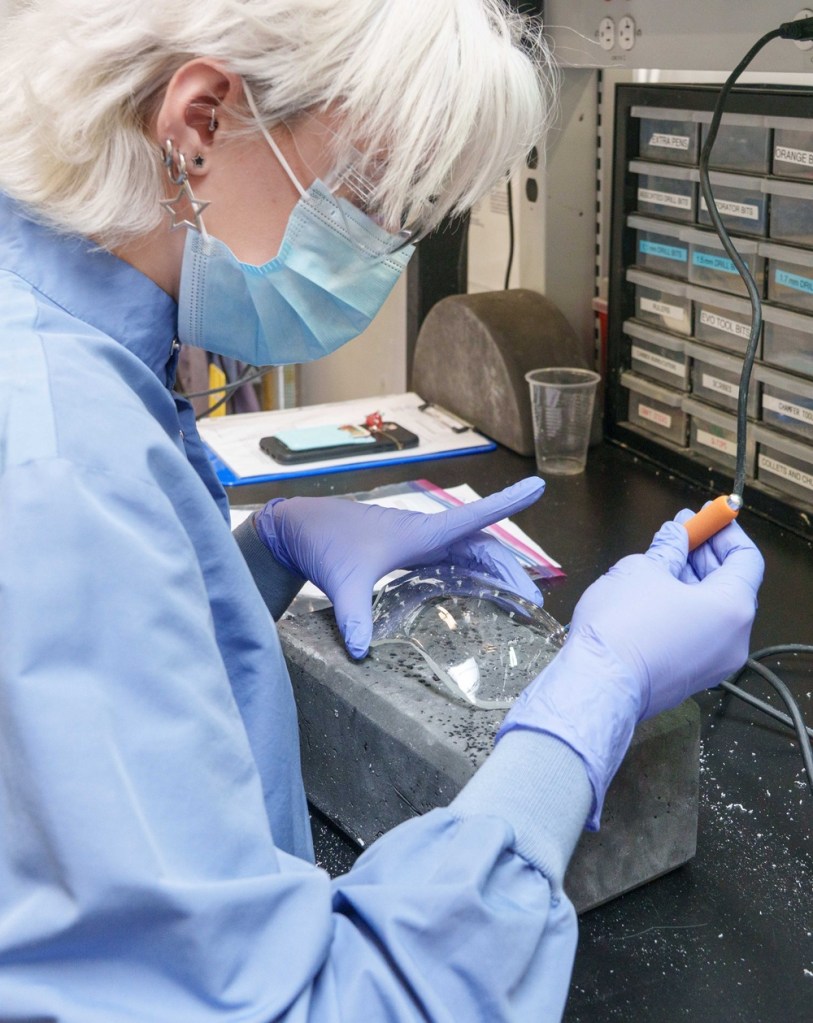
The Peninsula Post toured Longeviti’s expansive headquarters inside the City Garage complex (101 W. Dickman Street) earlier this year, meeting with team members and getting a behind-the-scenes look at how these implants are made. The facility buzzed with activity. Dozens of employees were operating advanced manufacturing technology alongside others performing the meticulous hand-finishing work required to perfect each implant. The visit offered a clear picture of Longeviti’s unique blend of innovation and craftsmanship.
Longeviti currently holds 50 global patents, and its products are approved for use in over 120 hospitals worldwide. Longeviti’s “implantable neuro platform” is a device placed where the patient’s own skull bone has been removed by surgery. It is translucent enough that ultrasound and other signals can easily travel from the brain through skin and hair, providing both reconstructive strength and real-time information. Over 4,000 patients across the country currently use the platform so their doctors can easily and inexpensively image their brains without radiation to monitor such conditions as tumors and hydrocephalus.
Baltimore is not only Longeviti’s home base but also a key part of its identity and growth strategy. Neil Christopher, Vice President of Operations and Advanced Programs, shared that CEO Jesse Christopher, Neil’s son, prioritized Baltimore as the headquarters because of its strong network of researchers and neurosurgical leaders.
“When we first started, neurosurgery and cranial reconstruction were two separate operations,” Neil explained. “By collaborating closely with surgeons, Longeviti helped pioneer a combined approach that reduces surgeries and lowers infection risks – an innovation that began here in Baltimore.”
Jesse Christopher echoed that commitment. “We have no plans to leave Baltimore as our headquarters,” he said. “We love Baltimore, we love the people, we love the vibe. We really want Baltimore to become the hub for the neurosciences, and we think we can make that happen.”

At Longeviti, the connection between art and medicine runs deep. Many employees come from creative fields, bringing precision, problem-solving, and a steady hand to the company’s manufacturing process.
“There’s a lot of detail-oriented work within the arts that crosses over into how detail-oriented the implants are,” said Kailyn Williams, a manufacturing technician with a ceramics background from Baltimore’s Maryland Institute College of Art (MICA).
Williams says she’s found her place at Longeviti. “We’re constantly growing as a company, and we’re seeing more cases than ever. This area, in general, is growing so quickly. It’s exciting to see it all develop.”
Jerica Root, Longeviti’s production manager, agreed. “It turns out a lot of artists do really well in the medical field. It translates really well. I never saw myself doing something like this, but I love it. It checks all the boxes: problem-solving, creativity, and making a difference.”
Longeviti’s growth is accelerating. The company recently announced the appointment of Tim Scannell, former President and COO of Stryker Corporation, as chair of its board of directors, alongside a $10 million strategic capital investment from Soleus Capital. This funding will fuel hiring, product development, and medical education efforts in the United States and abroad. Longeviti is also expanding its office and manufacturing space into Baltimore Peninsula’s Rye Street Market.
With full in-house design, manufacturing, packaging, and sterilization capabilities, Longeviti is poised to expand its market presence and deliver even more groundbreaking innovations in neurosurgery. For Baltimore, this means more than just new jobs: It’s a chance to solidify the city’s reputation as a global center of innovation.
 South Baltimore Peninsula Post